



African Currency Stability
Inflation & GDP Snapshot (2025–2026)
This data brief shows the 10 most stable African currencies, combining current inflation performance and economic scale (GDP).
—
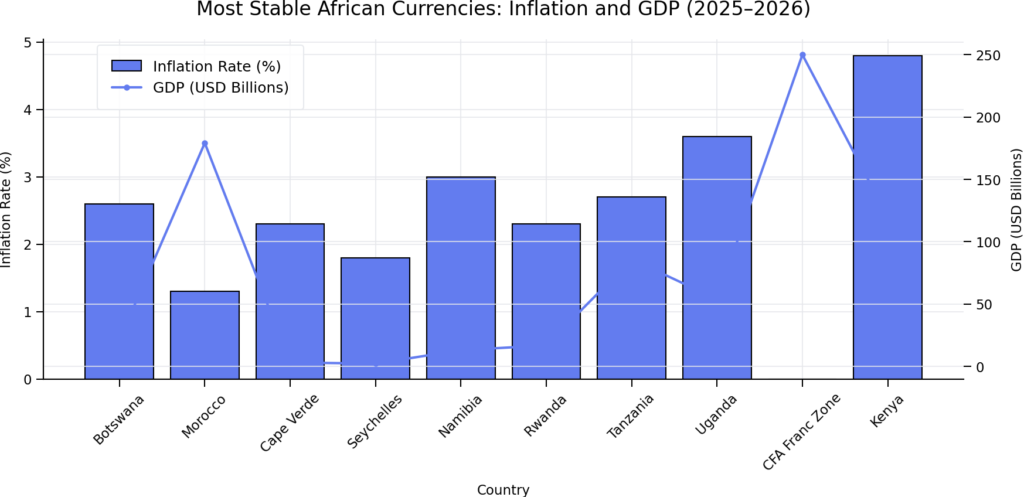
Chart: Inflation vs GDP — Most Stable African Currencies
Interpretation guide
- Bars (left axis): Latest inflation rate (%)
- Line (right axis): GDP in current USD (billions)
- Countries shown are consistently cited for low exchange‑rate volatility and credible monetary frameworks.
Key Findings (Executive Summary)
- Strongest nominal stability:
CFA Franc Zone and Morocco, supported by exchange‑rate anchors and disciplined monetary policy. - Best managed floats:
Botswana and Rwanda, combining low inflation with monetary flexibility. - Large economies with improving stability:
Kenya and Tanzania, reflecting recent policy tightening and FX market reforms. - Small but highly stable economies:
Seychelles and Cape Verde, benefiting from firm policy anchors and external FX inflows.
Interpretation for Decision‑Makers
For Policymakers
- Pegged or tightly managed regimes continue to outperform on inflation stability, but at the cost of monetary autonomy.
- Well‑managed floats (Botswana, Rwanda) demonstrate that credibility can substitute for hard pegs.
For Investors
- Currency stability correlates strongly with predictable inflation, not necessarily with GDP size.
- Smaller economies can offer lower FX risk when policy discipline is strong.
For Multilateral & Development Use
- Stable currencies are associated with lower macroeconomic transmission risk for concessional lending and long‑term projects.